
20th International Conference On
Computer and Information Technology (ICCIT 2017)
December 22-24, University of Asia Pacific, Dhaka, Bangladesh

Prof. Dr. Jamilur Reza Choudhury
Vice Chancellor,
University of Asia Pacific, Bangladesh

Mr. Qayum Reza Chowdhury
Chairman,
Board of Trustees
University of Asia Pacific, Bangladesh

Chowdhury Shahriar, PhD
Talk Title: Satellite Communication System Design
Abstract: Satellite communication has triumphed as one of the most fascinating stream of telecommunication engineering for last 75 years. While the world has moved on in tremendous pace, Bangladesh mostly stayed out of the procession, up until now. Recently Bangladesh has procured its first communications satellite and is on the brink of launching it to the orbit, which makes it a high time to talk about satellite communication (SATCOM). This presentation attempts to shed some light on SATCOM System Design in general. The topics that will be covered are - brief history of communication satellites, orbital dynamics, geostationary/geosynchronous satellites, channel propagation characteristics, communication system design - link budgeting, antennas, ground stations, example of real SATCOM system such as Iridium Satellite Phone, GPS, DVB standard, and new frontiers in SATCOM known as SmallSat and CubeSat.
Biography: Dr. Chowdhury Shahriar is currently working as Communications & Signal Processing Engineer in the Northrop Grumman Corporation. In past he has worked on a number of organizations including US Patent and Trademark Office (USPTO), MIT Lincoln Lab, and Federal Communications Commission (FCC). He has broad technical expertise in the area of communications and signal processing. His research interest includes wireless, mobile and satellite communication systems, software defined radio (SDR), cognitive radio (CR), dynamic spectrum access (DSA), statistical signal processing, and information theory, with emphasis on theoretical and applied research problems. Dr. Shahriar obtained BS, MS, and PhD in Electrical Engineering from Virginia Tech. The area of his research during PhD was on physical layer security challenges for 4G communication systems. His master’s thesis was on interference mitigation techniques from satellite communication systems. Apart from that he has developed keen interest on spectrum management policy while working at FCC.

Dr. Zeenath Reza Khan
Talk Title: Ethics Courses for IT students: Why is it crucial in the era of millennials and technology immersion?
Abstract: Phillip Budeikin, a millennial, created the social media game Blue Whale which encourages children to commit suicide after attempting a range of harmful challenges. When arrested, Budeikin said he was cleansing the society of ‘biological waste’ (Mann, 2017).
Forty percent of millennials today consider Facebook CEO Mark Zuckerberg a role model (Ray, 2017), who on numerous occasions has said ‘you can be unethical and still be legal; that’s the way I live my life’ (Call, 2017).
In June of 2011, Google introduced addictive Les Paul doodle that allowed users to strum away at strings that replicated Les Paul’s Gibson Guitar, only to have 5.3 million hours of estimated time spent by viewers playing this game (RescueTime, 2011) which according to Arvind Narayanan and Shannon Vallor equated to eight lifetimes (Narayanan & Vallor, 2014). Millennials behind the doodle initiative such as Ryan Germick stated that they didn’t ‘have much time for boring stuff like rules… [that they] don’t use handbooks or focus groups’ (Day, 2014).
All three cases mentioned above have two things in common – millennials and technology. The same millennials who make up the most-educated generation bracket in history, who have displayed flagrant need for connectivity and information sharing little regards for privacy and who have exhibited insatiable thirst and interest in technology and the digital space.
While students in nursing, law, auditing and such have well developed codes of professional ethics they are expected to follow as part of their profession, software engineers, digital content developers, and such are faced with ethical dilemmas that are surprisingly not addressed or highlighted often (Narayanan & Vallor, 2014). The Fourth Industrial Revolution is here, infusing and integrating technology into and between physical, digital and biological world (Schwab, 2016). The speed of infiltration and expectation of technological evolution has made the software life-cycle obscure, not requiring engineers to follow through all steps of development, minimizing importance of customer analysis, impact and feedback and ultimately deploying programs to the customers directly (Narayanan & Vallor, 2014).
What does this mean?
In case of victims of Blue Whale game, it means an imminent death. For Facebook users, unequivocal need for narcissistic pleasure, self-adulation and connectivity. And for Google’s Doodle users, simply stick fingers, sore eyes and an addiction that jumps from one app to the next, looking for the next hit of adrenaline and dopamine to keep the ‘high’ going.
But do Google’s Doodlers or Facebook CEO or Blue Whale game creator have an obligation to consider such negative consequences to their innovations? What are the principles or codes of conduct that should be guiding their developmental needs and behaviours?
With frequent reports of irresponsible decision-making in the technology world creating waves of devastation from financial to political and social fronts, it is critical that higher education institutions engage more millennials in dialogue to discuss and develop understanding of responsible software engineering to promote ethical practices in the real world.
So, how do we go forward? What is the answer to this dilemma? Are these real ethical issues in the digital space? This invited talk sifts through the sands of ethical dilemmas faced by millennials around the world and their consequences while making a case for the need to embed good ethical values and habits in students when developing applications or creating content in the digital space to ensure public good is paramount to any innovation that hits the market, based on insights from the impact of teaching such a subject at University of Wollongong in Dubai.
Biography: Dr Zeenath Reza Khan is an Assistant Professor. She has been teaching in the Faculty of Engineering and Information Sciences at University of Wollongong since 2001. She completed her PhD under full fee-waiver scholarship from University of Wollongong in Ethics and E-cheating among Students which was nominated for the Emerald Outstanding Doctoral Thesis Award 2016. Dr Khan’s research interests are in community informatics, ethics in IT, teaching and learning, and STEM for girls and has been nominated thrice for the Research Excellence Award by UOWD’s Research Committee. She is the winner of UOWD Teaching Excellence, BE Excellence in Teaching by Bangladesh Consulate in Dubai, Sony Gulf Federal Environment Award, Turnitin Global Innovation Awards: Africa and Middle East Region – Academic Integrity Category and recently Wollongong VC Award for Outstanding Contribution to Teaching and Learning 2016. She is currently a Fellow of Wollongong Academy of Tertiary Teaching Excellence (WATTLE).
In her spare time, she has been an active mentor for several graduation projects for MIC and CS students and has been involved in successful projects such as My Bei't, Hereos App, TextMatch, Ta'aleem, Sa’ma and iRecall all of which have been accumulating accolades. She is the founding chairperson of National Mathalon Competition, Teacher’s Forum: Math Bloc, Envirotalk Youth Earth Summit, Women in Educational Leadership Summit, Tech-G STEAM Camp for Girls and so much more.
Dr. Khan has to-date five book chapters, 10 journal articles, 23 conference papers to her name. She chaired the ranked International Conference on Academic Integrity and authoring the upcoming book Exploring Emerging Academic Integrity Issues in the Middle East.

S. M. Salim Zabir, PhD
Talk Title: Toward human centric evolution of IoT and its applications
Abstract: In recent years, IoT has become a fashionable jargon in the information and communication discipline. Despite the huge enthusiasm, most IoT deployments are restricted to dealing with automatic collection of data that has so far been collected manually. As such, for many people, connecting to the IoT does not bring any tangible benefit. In addition, connecting to the Internet of Things require special knowledge which common people do not possess. We believe that in order to be successful, the evolution of IoT should emphasize on participation of common people. Also, that the power of this technology will be more meaningfully exploited if it can be deployed in gathering the information that has so far been hidden around us. With such objectives, currently, we are working on developing a new generation IoT platform that we name as KIBAN. In addition, we have been conducting experiments on novel applications of IoT in the domains of food, agriculture, health and welfare. The speech will introduce KIBAN and such applications along with some projections into the future.
Biography: Dr. Salahuddin Muhammad Salim Zabir is currently working as a professor at the National Institute of Technology in Tsuruoka, Japan. He had his PhD and an MS in information science from Tohoku University, Japan. Before that, he obtained his MSc Engineering and BSc Engineering degrees in Computer Science and Engineering from Bangladesh University of Engineering and Technology. Prior to his current appointment, he was leading research and development on IoT, machine to machine (M2M), smart cities, e-health/wellness at Orange Labs/France Telecom, Japan. He has served at different positions at Tohoku University, Japan, Kyushu University, Japan, Kyung Hee University, Korea and Bangladesh University of Engineering and Technology. He also worked at Panasonic R&D headquarters in Osaka, Japan. His research interests include computer networks, networking protocols, IoT Technologies and applications, ubiquitous computing, applications of ICT in emerging countries etc. Dr. Zabir has been serving in the program/technical committees of various international conferences and has been contributing as editor/guest editor of scholarly journals. He is a senior member of the IEEE.
"Dr. Fatema Rashid" best paper awards will be presented to the top three papers.

Dr. Mohammad A. Karim
Fellow - IEEE, IET, OSA, SPIE, IoP
Provost and Chief Operating Officer
University of Massachusetts, Dartmouth, USA
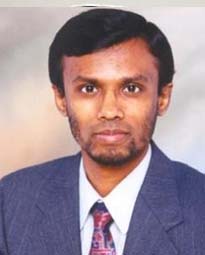
Dr. Mohammad S. Alam
Fellow - IEEE, IET, OSA, SPIE, IoP, IS&T, and IAPR
Dean, Frank H. Dotterweich College of Engineering
Texas A&M University - Kingsville,
USA


